

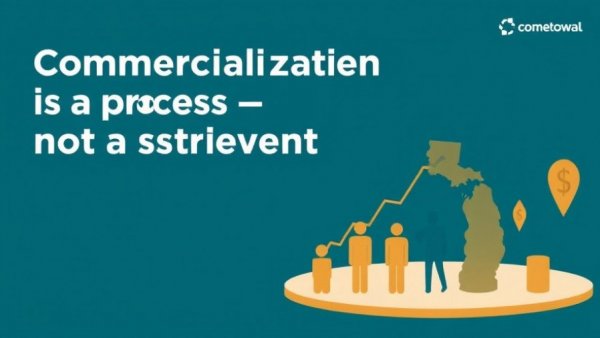
Understanding Commercialisation: A Multi-Step Journey
Many entrepreneurs begin their ventures with the notion that commercialisation occurs in a singular climactic moment—a product launch or an investor handshake. However, Richard Milne, CEO of INNOVIC, stresses that this perception is fundamentally flawed. Successful commercialisation is not merely about achieving key milestones; it is a systematic and structured process that begins long before the public sees a product, and it goes far beyond the initial launch.
Investigating the Opportunity: The First Step
The journey to commercialisation begins with a thorough investigation of the opportunity. Founders must ask essential questions to determine the viability of their idea. What specific problem does the idea address? Who is feeling the pain of this problem? Current market research must also identify existing solutions and understand whether potential customers are dissatisfied with those alternatives. Most importantly, founders need to explore whether these customers would be willing to invest in a better solution. Comprehensive early research can include competitor analysis and customer interviews, designed to inform rather than validate the original concept, setting the stage for a thoughtful process ahead.
Development Beyond Prototyping: A Holistic Approach
Once an opportunity appears to have potential, the next phase is development. This stage presents a multitude of interconnected considerations that go far beyond simply creating a prototype. Founders need to assess technical elements such as design, engineering, prototyping, and minimum viable products. Concurrently, intellectual property protection, branding, market pricing, manufacturing costs, regulatory compliance, and distribution channels all come into play. As Milne states, each decision made in this stage could significantly impact another aspect of the project, making it imperative for founders to continually adjust their strategies based on the evolving landscape of knowledge gleaned from ongoing feedback and research.
Embracing Change: Flexibility in the Process
Being rigidly attached to original concepts can hinder commercialisation efforts. Founders must understand that successful commercialisation doesn't preserve every single element of an initial idea; instead, it involves adapting to better respond to market needs. Feedback from testing and customer engagement can reveal critical insights. An early change in a design or feature can be minor and inexpensive, but late changes—post-manufacturing or large-scale production—can become disastrous and costly. Therefore, adaptability is key, and founders must be willing to evolve their ideas to create a viable, market-ready product.
Market Launch: Not the End, but a New Beginning
Finally, while many associate commercialisation with the market launch, Milne points out that this is merely another step in an ongoing process. True commercialisation includes continuous learning and adjustment even after a product hits the shelves. Entrepreneurs should monitor market response, customer feedback, and competitive dynamics closely, using this data to refine product offerings and marketing strategies long after the initial launch.
Take Action: Start Your Commercialisation Journey
For small business owners and entrepreneurs eager to translate their ideas into commercially viable products, understanding the commercialisation process is crucial. By following a structured path that includes careful investigation, flexible development, and active engagement with the market, you can increase your chances of launching not only a product but a successful business. Take the vital first step today: start gathering insights, test assumptions, and prepare for a rewarding journey of making your idea a reality.






Write A Comment