


Simon Smith’s Vision: Why Sustainable Living In Australia Demands Corporate Responsibility Today
Sustainable living in Australia is more than just a trending buzzword—it’s a call to action for every business with roots in the community it serves. For Simon Smith, of Everwell Media, this isn’t theory, but imperative. He’s quick to dispel the notion that environmental stewardship is merely an optional extra for corporations. “The misconception,” Simon observes, “is that sustainability is something businesses can choose to opt into, rather than a core responsibility toward the people and places they serve.” From his vantage point—shaped by a career amplifying voices on business, health, and community—every Australian business has the power, and the duty, to lead in practical sustainability.
Why does this matter today? Because the community itself is evolving, expecting not just compliance but care
"Businesses have a responsibility to be looking after the community that they are serving."
- Simon Smith, Everwell Media

The Urgency Behind Corporate Social Responsibility in Australia’s Environmental Future
Simon Smith doesn’t mince words about the stakes in play; in his view, the urgency behind sustainable living in Australia is existential. Climate projections and environmental degradation aren’t abstract. “Our planet really deserves to be looked after. If we don't, we won’t have an earth to live on.” This statement, weighty with both fact and conviction, highlights a truth: short-term thinking risks long-term catastrophe—not just for balance sheets, but for the foundations of life itself.
What separates lasting impact from fleeting PR? Simon identifies a core principle—responsibility must be woven into the fabric of every business operation, not relegated to a “green team” or sustainability report
As businesses consider how to embed sustainability into their operations, it's valuable to look at how targeted campaigns can drive real change at the community level. For example, the EPA’s recent initiative to reduce problem waste demonstrates how coordinated efforts can protect both public health and the environment, offering practical lessons for corporate responsibility programs.
"Our planet really deserves to be looked after. If we don't, we won’t have an earth to live on."
- Simon Smith, Everwell Media
Rethinking Renewable Energy: Small Wind Turbines and Home Solar Systems as Practical Solutions
When most Australians picture renewable energy, they envision vast wind farms dotting the horizon or fields of commercial-scale solar. But according to Simon Smith’s experience, this “bigger is better” logic is ripe for reassessment. In his view, sustainable living Australia will flourish when solutions are localized and community-accessible—where homes and neighborhoods generate and manage their own clean energy.
Simon points to the growing popularity of small wind turbines and modular solar systems for individual households. These solutions, he says, are not just more personable—they’re more practical. “The true promise of sustainability lies in empowering everyday Australians to generate their own power, reduce grid reliance, and actively participate in environmental stewardship.” It’s a philosophy rooted in inclusivity and practicality, not simply grand gestures.
The Flaws of Large-Scale Wind Farms: Why Bigger Isn't Always Better
Australian landscapes are increasingly dominated by large-scale wind farms. For many, these installations signify progress. Yet Simon Smith sees a major disconnect. “The big windmills are an eyesore and don’t make the best use of resources compared to smaller, community-focused solutions.” His candid observation cuts through standard pro-renewable narratives, highlighting two primary flaws: large turbines often disrupt local ecosystems and provide only a modest contribution—around eight percent—to the grid relative to their cost and impact.
According to Simon, this model overlooks a central tenet of effective sustainable living Australia: innovations should enrich the communities they touch. Oversized installations may signal government investment, but they rarely empower households or foster direct environmental engagement. Instead, Simon champions the shift toward decentralized renewables—where the benefits, decisions, and even the aesthetics reflect local priorities, not just national targets.
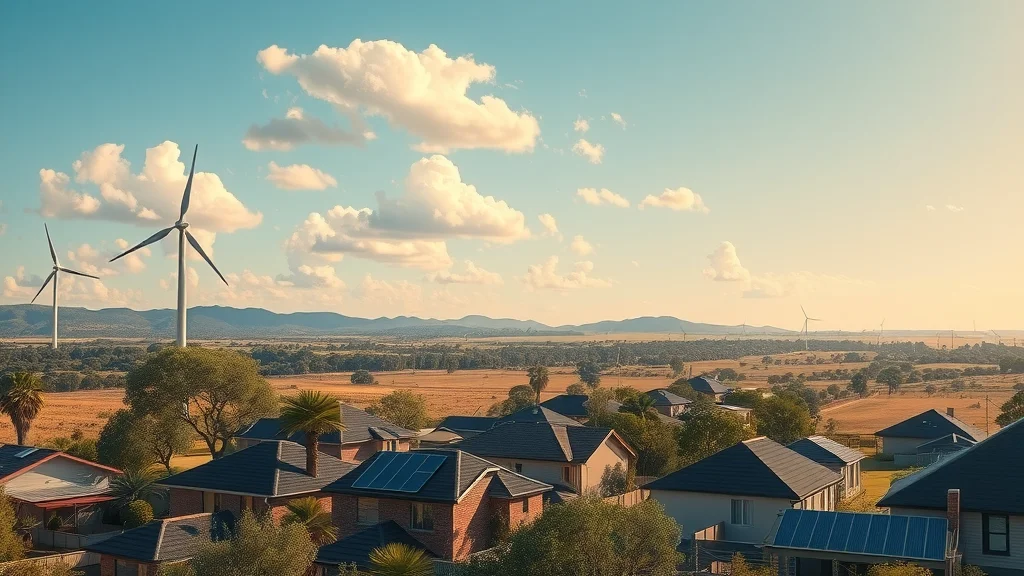
"The big windmills are an eyesore and don’t make the best use of resources compared to smaller, community-focused solutions."
- Simon Smith, Everwell Media
Harnessing Continuous Power: Combining Small Wind Turbines and Solar to Maximize Sustainability
An often-overlooked “aha moment” of renewable strategy lies in the complementarity of solar and wind. Solar installations are powerful—but only when the sun shines. Small wind turbines, by contrast, can operate through the night, often when household demand remains high. Simon Smith highlights how coupling these systems creates a virtuous energy cycle: solar panels maximize daylight, while wind turbines bridge the gap during overcast days or nighttime hours.
For corporate social responsibility and community leadership, Simon sees this hybrid approach as proof that sustainable living in Australia can be robust, affordable, and ubiquitous. “Households can combine solar with small-scale wind and modern batteries to cut both costs and carbon, while supporting the grid.” What’s more, these distributed setups foster grassroots energy literacy, giving residents tangible stakes in Australia’s decarbonization journey.
Small wind turbines operate 24/7, unlike solar which depends on daylight.
Home solar systems paired with batteries enable energy independence.
Community-level renewable energy promotes broader adoption and responsibility.

Bridging Community with Corporate Sustainability: Strategies for Australian Businesses
Driving forward “sustainable living Australia” isn’t simply about adopting green technologies—it’s about fundamentally renewing the partnership between business and community. Simon Smith repeatedly emphasizes that companies can no longer remain detached from the places and people they impact. “Leaders must co-create initiatives with local communities, not just for them.” This participatory approach yields greater trust, better outcomes, and a more lasting sense of environmental responsibility.
What does this look like in practical terms? For Simon, it means shifting investment from distant, impersonal infrastructure projects (like monolithic wind farms) to locally significant ones—community solar installations, neighborhood battery funds, or grassroots educational campaigns
Aligning Business Practices with Community Needs for Sustainable Impact
It’s a mistake to see communities as passive beneficiaries of corporate largesse. According to Simon Smith, the best sustainable living Australia strategies are those that treat residents as partners and innovators in their own right. “Sustainable change happens when corporations listen—really listen—to community concerns and make those the cornerstone of their initiatives.”
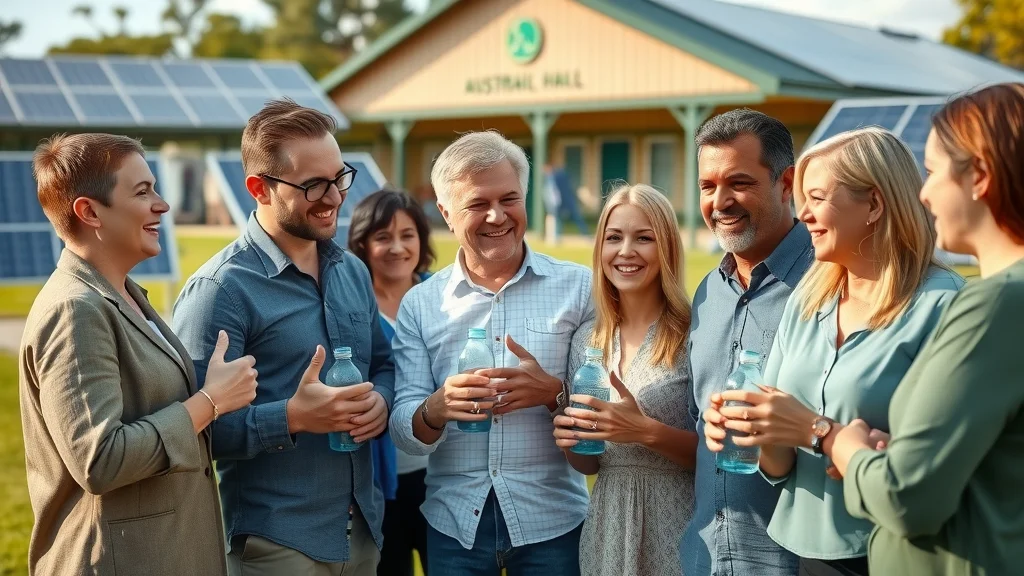
This community-centric philosophy unlocks new opportunities for Australian organizations. By acting as enablers and educators, companies can make impressive environmental impacts while also elevating their role as local custodians. Examples include collaborative community gardening schemes, local clean energy cooperatives, and creative waste reduction competitions. Each project, however modest, becomes a catalyst for wider adoption and generational change.
Practical Steps Australian Companies Can Take to Lead in Sustainable Living
The first step? Make sustainability local and visible
Another non-negotiable is partnership. Simon insists the best results are born of collaboration, not competition. Whether companies work alongside city councils, indigenous groups, or neighborhood volunteers, joint ventures always outperform siloed ones. Ultimately, Simon urges leaders to “focus on what matters most to their neighbors, not just their shareholders.” In doing so, organizations become not just agents of profit, but stewards of place.
Incorporate local renewable energy investments instead of large scale, impersonal ones.
Educate employees and customers about environmental impacts and sustainability efforts.
Collaborate with community groups for tailored sustainability projects.
Navigating Misconceptions: What Sustainable Living Australia Is and Isn't for Businesses
Simon Smith’s decades of storytelling with Everwell Media have taught him that the biggest obstacle to progress is often misunderstanding. Many businesses mistake compliance for commitment; they check regulatory boxes and assume the job is done. But genuine sustainable living Australia, Simon warns, “is neither a checklist nor a finish line.” The real journey is one of ongoing curiosity and exploration—with every business decision opening the door to deeper involvement and greater accountability.
He’s equally clear that sustainability shouldn’t be forced. Instead, it should feel like a collaborative adventure—one where the company and the community continuously learn from each other. In Simon’s words, “sustainability is not a binary state, but a mindset and a willingness to try, adjust, and try again.” This view liberates leaders from perfectionism, welcoming small wins, honest reflection, and transparent recalibration. In a world where eco-anxiety can paralyze, Simon’s approach is both pragmatic and optimistic—a rallying cry to keep exploring, together.
Understanding Corporate Responsibility Beyond Compliance
Far too often, “corporate responsibility” is interpreted as the bare minimum required by law. Simon Smith challenges this mindset—urging Australian businesses to reach higher. “The real measure of success,” he says, “isn’t how many policies you’ve enacted, but how embedded sustainability is in your company’s DNA.” This depth of commitment manifests in every part of the business, from procurement and packaging to customer engagement and aftercare.
He encourages leaders to move past reactive, box-ticking approaches and adopt a posture of ongoing learning. In practical terms, this could mean developing metrics that reflect not just carbon reductions, but also community well-being and employee pride. It’s about demonstrating that sustainable living Australia can—and should—be the foundation of both your operational excellence and public reputation.

Why Sustainability Should Be Framed as an Ongoing Exploration, Not an Instruction
” For him, the magic happens when organizations treat eco-consciousness as a series of questions, not just answers: “What are we missing? Who else can we invite? How can we learn together?”
This philosophy is more than feel-good rhetoric—it’s a practical strategy for success. By framing sustainable living Australia as a journey, not a sermon, companies tap into their teams’ creativity, their communities’ insights, and the ever-evolving landscape of environmental science. The most impactful organizations, Simon says, “are not those with the shiniest annual reports, but those brave enough to keep experimenting, collaborating, and listening.”
"Sustainability isn't about ticking boxes, but about ongoing curiosity and community care."
- Simon Smith, Everwell Media
Conclusion: Driving Sustainable Living Australia Forward Through Corporate Social Responsibility
Summarizing Simon Smith’s Expert Perspectives on Practical, Community-Focused Sustainability
Empower communities through accessible renewable energy solutions.
Elevate the corporate role as custodians of local environmental health.
Foster a culture of curiosity and continuous improvement in sustainable practices.
"Businesses must lead by example, nurturing both planet and people for a sustainable future."
- Simon Smith, Everwell Media

Next Steps: Take Action to Embed Sustainability in Your Corporate Strategy Today
Simon Smith’s vision is clear: true sustainable living Australia begins when leaders see themselves as active custodians and partners to their communities. The path forward is within reach—start with local, visible initiatives; nurture ongoing dialogue; challenge your assumptions; and collaborate, always. Let your business be a testbed for bold ideas, a hub for environmental education, and a pillar of trust in your local ecosystem. The most successful Australian organizations will be those that transform curiosity into commitment, and commitment into lasting, community-powered change.
Ready to redefine your company’s approach to corporate social responsibility? Join Everwell Media’s conversation on practical sustainable living strategies—inspire your team and make a difference that matters
If you’re inspired to deepen your understanding of how sustainability and community health intersect, there’s even more to explore. Discover how government-led efforts, such as the EPA’s campaign to reduce problem waste, are setting new standards for environmental protection and public well-being across Australia. By learning from these broader initiatives, your organization can adopt advanced strategies that not only minimize environmental impact but also foster healthier, more resilient communities. Take the next step and see how aligning your business with these forward-thinking approaches can amplify your impact and leadership in sustainable living. Explore the EPA’s campaign to reduce problem waste and protect communities for actionable insights and inspiration.




Write A Comment