 Add Row
  Add
Add 



Simon Smith’s Core Thesis: Businesses Must Embrace Their Role in Protecting the Australian Community and Environment
"I think that businesses have a responsibility to be looking after the community that they are serving." — Simon Smith, Everwell Media
Australia is at a crossroads, where sustainable living is no longer a trend but an essential lens through which every business decision must pass. Simon Smith, founder of Everwell Media, approaches this with a compelling urgency: businesses can’t remain spectators. They must become active partners in nurturing both community and environment. According to Smith, the expectation now is shared stewardship—that companies not only serve customers, but protect and uplift the social and ecological landscapes they inhabit. For Australia’s business leaders—Marketing Directors, Business Analysts, HR Leaders, Community Managers, Event Planners, and Corporate Communications Officers—this means weaving corporate social responsibility (CSR) strategies into the very fabric of their organizations.
Smith’s philosophy draws from Everwell Media’s mission: connecting Australians with ideas that shape a healthier, smarter, and more connected society. He challenges leaders to move beyond performative gestures, instead building structures that foster tangible, positive impact. “There’s a misconception that sustainable living Australia is purely a government or activist issue,” Smith regularly observes. Yet in his experience, the greatest transformations occur when businesses recognize their power as catalysts for systemic change. This mindset shift propels companies out of passive compliance and into the sphere of true community guardianship. The implications are clear: for enterprises in Australia, the path to enduring relevance and trust starts with authentic, community-centric action.
Why Corporate Social Responsibility Is Urgent for Australian Businesses Today
"Our planet really deserves to be looked after because if they don't, then we won't have an earth to live on." — Simon Smith, Everwell Media
As sustainable living Australia becomes increasingly entwined with core business identity, Simon Smith highlights a critical truth: the urgency of taking action now. Climate change’s visible toll on Australia—droughts, bushfires, water stress—underscores the real-world stakes of neglecting corporate responsibility. According to Smith, organizations that neglect these issues jeopardize not only the environment but also their own longevity and reputation. He points to growing public demand for environmental stewardship as a powerful motivator for businesses to step up. Australians are no longer content with vague commitments; they expect measurable impact and transparent initiatives.
Smith warns that overlooking CSR isn’t just a missed opportunity—it’s a reputational risk. Forward-thinking companies, he asserts, are now defined by their willingness to address environmental challenges head-on. CSR is not just a checkbox; it’s a strategic imperative. The shift toward sustainability isn’t merely about compliance or optics, but securing a future where both business and society can thrive. Smith’s insights encourage business leaders to recognize their pivotal role, offering reassurance that despite the complexity, impactful action is within reach—especially when grounded in community needs and collaboration.
- Growing public demand for environmental stewardship
- The tangible impacts of climate change on Australia
- Reputation and long-term viability linked to CSR efforts
Innovative Renewable Energy Strategies Beyond Big-scale Projects
Critiquing Large Wind Farms: The Eyesore vs. Impact Dilemma
"What baffles me are all the windmills around the place that are a bit of an eyesore... There are a lot better ways that they could be spending that money." — Simon Smith, Everwell Media
One of Simon Smith’s most thought-provoking critiques targets the proliferation of large-scale wind farms in Australia. He contends that although these projects symbolize progress, they often clash with the local communities’ values and the Australian landscape’s natural beauty. To Smith, the real challenge lies in balancing environmental gain with aesthetic and social considerations. He raises a point that many overlook: “What truly baffles me is how these vast wind farms, often seen as ‘green’ infrastructure, can dominate the horizon yet have limited overall power contribution.”
Smith’s expertise reveals that large wind installations—even extensive ones contributing a modest percentage to the national grid—may not always justify the public and environmental costs they impose. He suggests that the focus and funding currently funneled toward these large, visually intrusive projects could be better deployed. “There are smarter, community-oriented alternatives,” Smith insists, highlighting an often-ignored debate within sustainability circles: the importance of scale, aesthetics, and direct local benefit in renewable energy strategies. His perspective inspires corporate and community leaders alike to reassess where to direct investments for optimal results.
In fact, the conversation around responsible environmental action extends beyond energy generation. For businesses seeking practical ways to support their communities, initiatives like the EPA's campaign to reduce problem waste offer valuable insights into how targeted efforts can protect both public health and the environment.
Harnessing Small-Scale Wind Turbines and Home Solar Systems for Continuous Clean Energy

- Small wind turbines in gardens as an affordable alternative
- Complementing solar panels with 24-hour energy generation
- The role of government subsidies for batteries and renewable installations
Diving deeper, Simon Smith spotlights solutions that decentralize energy generation and democratize access to clean power. He envisions a future where small wind turbines—positioned harmlessly in private gardens or suburban spaces—work in harmony with rooftop solar systems. “People underestimate how much energy they can generate outside of the massive infrastructure—especially with wind, because winds work 24 hours a day, not just during daylight hours,” Smith frequently notes. This subtle yet powerful insight frames a core advantage over solar: continuous, around-the-clock renewable energy for Australian families and businesses.
According to Smith, the next leap forward involves leveraging government subsidies to make battery storage and renewable installations truly accessible. He points to programs that already enable Australians to invest in domestic batteries, further increasing the value of pairing solar and small wind. The real promise, he says, lies in “offering people more than one choice—decentralized energy production that gives communities control and reduces the need for eyesore mega-projects.” For businesses, this isn’t just environmental stewardship—it’s a practical move toward lower costs, gendered risk, and enhanced brand reputation.
Embedding Sustainability into Australian Business Practices: Community-Centric Approaches
Balancing Environmental Goals with Practical Community Benefits
- Encouraging distributed energy solutions at the household level
- Engaging local communities in sustainability initiatives
- Overcoming misconceptions around corporate responsibility and costs
Simon Smith underscores the necessity for business leaders to ground every sustainability initiative in practical, community-first thinking. In his experience, the most durable and respected company impact doesn’t emanate from headline-grabbing campaigns, but from scalable, distributed solutions that empower everyday Australians. Smith advocates for strategies that enable households to participate—such as subsidized solar panels and compact wind turbines—emphasizing the systemic ripple effect of these local investments. “When households become contributors to the grid, not just consumers, everyone benefits: bills drop, resilience rises, and the ecosystem thrives,” he often remarks in consultation with forward-thinking leaders.
Central to Smith’s philosophy is community engagement: businesses should not only embed eco-friendly practices but also activate local support and collaboration. He believes tackling stubborn misconceptions—like the idea that CSR is prohibitively expensive or burdensome—is vital. By highlighting case studies and facilitating transparency, organizations can dismantle skepticism and show that sustainable living in Australia genuinely delivers measurable value. Accentuating education and shared storytelling, Smith sees HR leaders, communications officers, and community managers as the vanguard of this shift—helping Australians close the gap between “knowing” about sustainability and truly, tangibly, feeling its benefits.
Practical Tips for Businesses to Advance Sustainable Living in Australia
- Invest in community-scaled renewable projects rather than only large infrastructure
- Partner with local governments to incentivize home solar and wind integration
- Educate employees and customers about the benefits and feasibility of sustainable choices
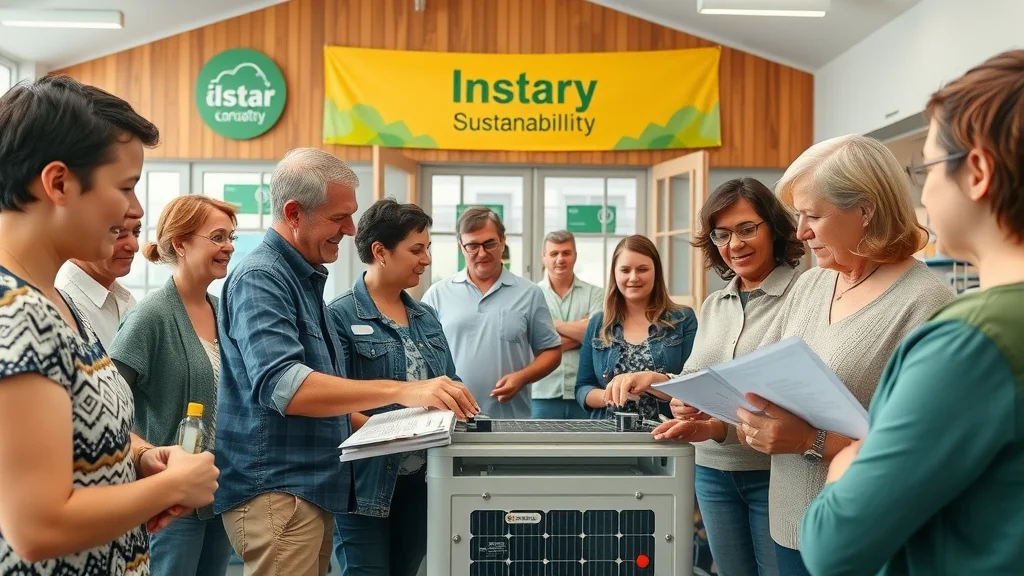
According to Simon Smith, advancing sustainable living Australia within a corporate context requires a pivot away from “one-size-fits-all” approaches. He urges organizations to start small but think systemic: first, by investing in renewable energy solutions that directly benefit local communities—whether through subsidized installations, educational initiatives, or co-op partnerships. Second, Smith recommends collaborating with governments and regional councils to amplify incentives, making it easier for individuals to access the tools and knowledge they need.
Finally, Smith sees education as the ultimate catalyst. For businesses, this means going beyond glossy brochures and building a company culture where every employee and customer understands not just the “how” but the “why” behind sustainable behaviour. He challenges leaders—especially those in HR, communications, and event planning—to model this at every level. When knowledge gaps close, curiosity takes root, and sustainable practices become part of daily life, the result is a movement, not just a mission—a future where Australia leads in community-driven environmental innovation.
Summary: Unlocking the Potential of Sustainable Living through Informed Corporate Responsibility
"Winds work 24 hours a day rather than just 12 hours of sunlight – it’s a promising alternative for sustainable energy generation." — Simon Smith, Everwell Media
- Businesses must prioritize community wellbeing in their CSR agendas
- Reevaluate renewable energy investments to balance impact and aesthetics
- Explore innovative, smaller-scale energy solutions for lasting benefits
Take Action: Align Your Corporate Strategy with Australia’s Sustainable Future
Start by evaluating your organization’s CSR journey: Are your current initiatives truly benefiting the communities you serve? Could your investment in renewables be more locally impactful? Have you demystified the costs and benefits of sustainability for your employees and customers? The time for “someday” is now
Ready to transform your business and amplify your community impact through sustainability? Partner with Everwell Media to access smart strategies, connect with changemakers, and take the next step in Australia’s sustainable future
If you’re inspired to deepen your understanding of how environmental responsibility can shape healthier communities, consider exploring broader initiatives that address waste reduction and public health. The EPA’s recent campaign to reduce problem waste highlights the power of collective action and policy-driven change in safeguarding both people and the planet. By integrating these larger-scale perspectives with your organization’s sustainability journey, you’ll be better equipped to drive meaningful, long-term impact. Discover how aligning your business with community-focused environmental campaigns can unlock new opportunities for leadership and innovation by learning more about the EPA’s call to action for community health.




Write A Comment